Back to shelf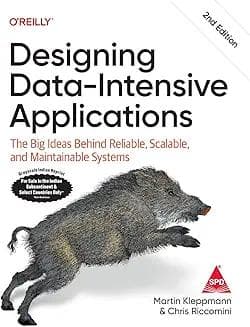
CompletedBackendSystem DesignDatabases
Designing Data-Intensive Applications
by Martin Kleppmann
A comprehensive guide to building reliable, scalable, and maintainable distributed systems. The book explains databases, storage engines, replication, partitioning, transactions, distributed systems, stream processing, and data architecture using real-world concepts and practical examples.
“
From the book
A comprehensive guide to building reliable, scalable, and maintainable distributed systems. The book explains databases, storage engines, replication, partitioning, transactions, distributed systems, stream processing, and data architecture using real-world concepts and practical examples.
Catalog Card
Pages616
PublisherO'Reilly Media
Checked out
May 2025
Returned
Aug 2025
BackendSystem DesignDatabasesDistributed Systems
Dog-eared pages
Key Takeaways
01
Data modeling decisions affect scalability more than technology choices.
02
Replication improves availability but introduces consistency challenges.
03
Partitioning helps scale large datasets horizontally.
— torn from the notebook —
This book completely changed the way I think about backend architecture. Instead of focusing on frameworks, it explains the fundamental principles behind reliable software systems.
The chapters on replication and partitioning made distributed databases much easier to understand. I now have a much clearer picture of how modern applications scale.
One of the most valuable lessons is that every architectural decision involves trade-offs. There is rarely a perfect solution.
The explanations of transactions, consistency models, and consensus algorithms helped connect many concepts that previously seemed unrelated.
I also appreciated how the author compares different database technologies without promoting a single approach, making it easier to choose the right tool for different use cases.
This is one of the best books for developers who want to move from writing backend code to designing scalable software systems.
Where to find it